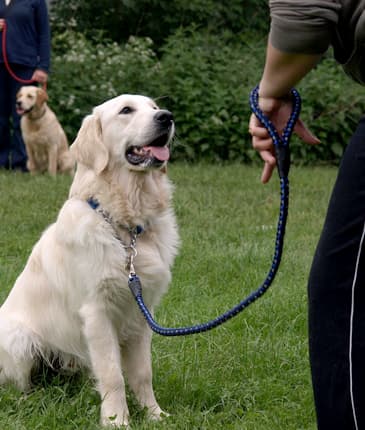
Coming when called is a skill I want a dog to understand before an owner needs it in a difficult situation. Calling across a busy park is a test. Teaching begins with a simpler exercise, where you can guide the response and make the meaning clear.
For Los Angeles owners, that may mean starting inside an apartment or in a securely enclosed yard. The first goal is a clear, repeatable response, rather than impressive distance.
Choose a clear beginning and finish
Use one recall cue consistently. Start a few steps away in a quiet space, say the cue once, and encourage your dog toward you. Make the destination clear: close enough for you to calmly take hold of the collar or leash. Then release the dog when the repetition is finished.
Acknowledge the response in a way your dog values. Food, praise or a brief game can be useful. Avoid calling the dog over and immediately doing something unpleasant; you want approaching you to remain a worthwhile choice.
Use a long line to manage distance
Practice outside with a suitable long line and a comfortably fitted attachment. Choose open space away from traffic, other dogs and tangled obstacles. Handle the line to avoid sudden stops or wrapping it around hands or legs. A long line is management while you teach, not permission to jerk a dog toward you.
Begin at a distance where your dog can succeed. If the dog is already absorbed in a difficult distraction, move closer and simplify the exercise. Repeating the command five times is unlikely to clarify what the first one meant.
Add one difficulty at a time
Increase distance, distraction or duration separately. A dog that responds in the living room may still need guided practice around squirrels, joggers or other dogs. Keep sessions short enough that you can stay consistent and the dog can stay engaged.
Include ordinary recalls during the day, then let the dog return to an appropriate activity. Recall should not predict that all freedom immediately ends.
Protect the skill while it develops
Keep your dog leashed where required and anywhere an unreliable response could create danger. A dog park, roadside or unfenced trail is not the place to discover whether training has transferred.
If your dog runs away, freezes or becomes reactive when you call, an individual lesson can help identify the missing steps. I work with Los Angeles and San Fernando Valley owners on recall as part of practical leash and everyday obedience training.