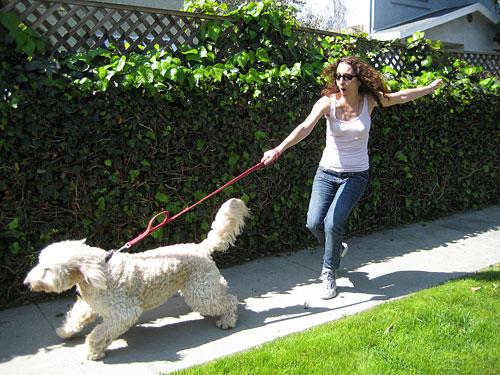
Owners often ask which piece of equipment will fix pulling, barking or poor listening. I start with a different question: what are we teaching, and can you handle the dog safely while teaching it? Equipment should support that work.
The right setup depends on the dog, the handler, the environment and the training plan. Buying a stronger tool without understanding its fit or use can add confusion instead of clarity.
Start with secure everyday handling
Check the condition and fit of your leash, collar or other attachment before practice. Look for worn stitching, damaged clips and a fit that lets the dog slip out. Use equipment you can hold comfortably and consistently, particularly around Los Angeles sidewalks and apartment entrances.
A standard fixed-length leash is usually easier to manage during a lesson than a retractable one. The goal is enough room for comfortable movement while keeping the dog out of traffic and other people’s space.
Give each item a specific job
A long line can help manage distance while practicing recall in an appropriate open area. It does not replace supervision, and it should not trail into traffic, bicycles or other dogs. Avoid allowing a running dog to hit the end at speed.
A place bed or cot provides a clear physical boundary for teaching a settle routine. Choose a stable surface and size that lets the dog lie comfortably. Begin with a short, understandable task before expecting the dog to remain there through a busy dinner.
Introduce confinement thoughtfully
A properly sized crate can be part of a structured household routine. Introduce it gradually, keep the environment comfortable and make sure the dog’s exercise, bathroom and social needs are met. I often prefer sturdy, enclosed crate designs, but the individual dog’s response matters.
A dog that panics, injures itself or persistently tries to escape needs an assessment. Changing the crate alone may not address the underlying distress. Do not leave a training collar or equipment that can catch attached to an unattended confined dog.
Learn the handling before adding specialized tools
I use different training tools when appropriate, but I do not recommend choosing one from a product description alone. Fit, timing, pressure and release need to be taught. A qualified professional can help decide whether a tool is suitable and show you how to use it.
Bring your current equipment to an evaluation rather than buying everything first. For private training in Los Angeles, I can help you build a practical setup around the actual behavior and your ability to follow through consistently.